Pink City Romance — Simran & Vikram's Jaipur Heritage Wedding
A fort venue, elephant procession, and a Rajasthani folk troupe that had guests dancing until 2 AM. Simran and Vikram's Jaipur wedding was everything a heritage celebration should be.
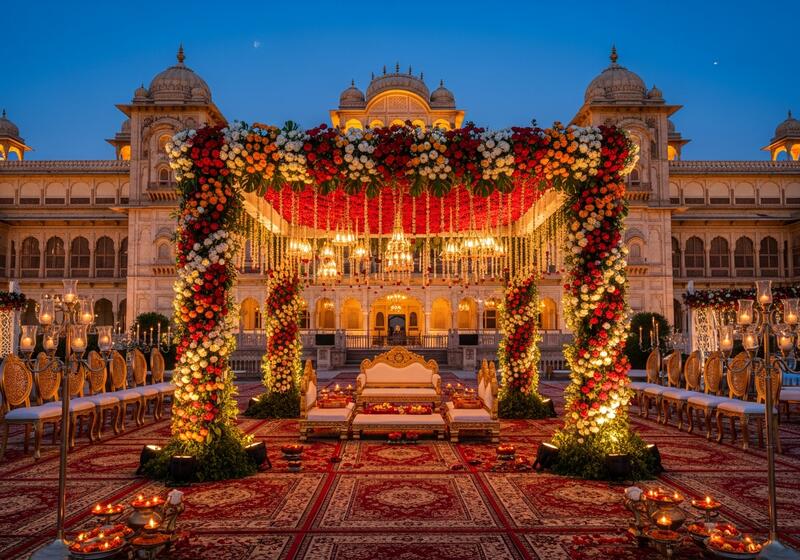
There is a moment in every Jaipur wedding — usually around 9 PM, when the torches are lit and the folk musicians find their rhythm — when guests stop photographing and simply watch. That moment happened for Simran and Vikram's 200 guests on a cool February evening inside the ramparts of a 17th-century fort. The Fort Venue Jaipur is one of India's richest cities for destination wedding venues . Forts, havelis, palace hotels, and garden estates compete for couples seeking the authentic Rajasthan aesthetic. Simran's family had attended a wedding at a fort property outside the city years earlier and had remembered it ever since. When it came time to book their own celebration, the call took thirty seconds. The venue offered exclusive buyout for three days: a rarity that allowed the family to configure every space exactly as they wished. The inner courtyard became the Mehendi garden; the battlements served as the Sangeet stage; the main hall, with its hand-painted frescoes, hosted the wedding ceremony. The Baraat Vikram arrived on an elephant — a decision that took two minutes to make and two months to permit. The elephant, named Lakshmi, was decorated with painted patterns and marigold garlands and carried Vikram through the main gate at dusk. The photography and videography team had positioned itself on the fort wall above the gate to capture the entrance from above. That shot — Lakshmi silhouetted against the pink stone arch, the sun just behind the horizon — became the couple's wedding portrait. Music, Food & Décor Their decorator worked entirely in the Rajasthani palette: deep crimson, royal blue, and 22-carat gold leaf on the ceremonial props. The catering team served a 14-dish Rajasthani thali dinner — dal baati churma, laal maas, gatte ki sabzi, and more — which drew longer queues than the bar. The folk troupe — a kalbeliya dancer, two sarangi players, and a dhol — performed for three hours. By the second hour, half the guest list had joined them on the stone flo